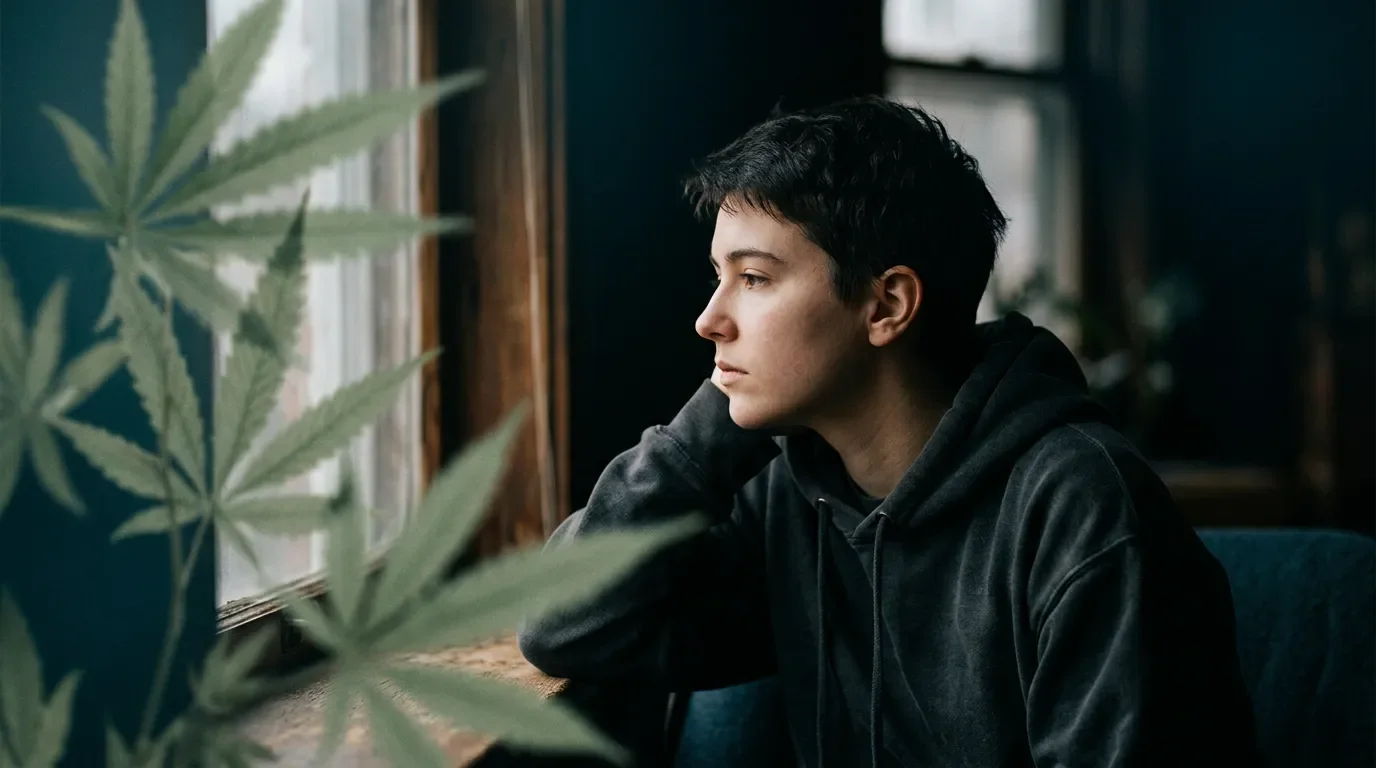
Weed and your brain: what a study of 463,000 teenagers actually found

Weed and your brain: what a study of 463,000 teenagers actually found

A 2026 study following nearly half a million adolescents found that any cannabis use in your teens roughly doubles the risk of psychotic and bipolar disorders by your mid-20s. Here's what the data actually says, why the adolescent brain is more vulnerable, and what to watch for.
Gen Z Health Daily
2026. 6. 10. · 23:12
구독 5개 · 콘텐츠 5개
If you smoked weed as a teenager — or know someone who did — a study published earlier this year is worth your attention. It doesn't tell you cannabis is evil. It tells you the timing might matter a lot more than anyone thought.

What a half-million teenagers revealed

Researchers at Kaiser Permanente tracked 463,396 adolescents ages 13 to 17 all the way through age 26 — one of the largest studies ever done on this question. They used routine health records from standard pediatric visits, not self-reports from a skewed sample. 1
The finding: teenagers who reported any past-year cannabis use were significantly more likely to later be diagnosed with a serious psychiatric disorder. Not marginally more likely. Roughly double the risk for psychotic disorders and bipolar disorder. The cannabis exposure typically preceded the diagnosis by 1.7 to 2.3 years — meaning the sequence ran in one direction, not the other.
A separate Johns Hopkins analysis of nearly 700,000 health records published in March 2026 reached a similar conclusion: cannabis use disorder in young people is linked to subsequent diagnoses across multiple psychiatric categories, with the association stronger at younger ages. 2
Two studies, two independent datasets, pointing the same way.
통계 카드를 불러오는 중…

The part that tends to get lost: this wasn't about heavy users

Most previous research focused on people with cannabis use disorder — daily users, people who couldn't stop, people with obvious problems. This study screened every teenager at a routine checkup and asked about past-year use. Any use. Even occasional, even "I've tried it a few times."
After accounting for prior mental health conditions and other substance use, the elevated risk still showed up. That changes the conversation. The typical framing is: occasional use is fine, it's only a problem if you're doing it every day. This data doesn't support that framing for adolescents.
To be clear: association isn't causation. Not every teenager who uses cannabis develops a psychiatric disorder — the absolute majority don't. But the population-level signal is real enough that the researchers behind this study called for it to be treated as a serious public health issue, not a benign behavior.

Why the adolescent brain is different

Here's the part that actually explains the risk: your brain isn't fully developed until your mid-to-late 20s. The prefrontal cortex — the region responsible for decision-making, impulse control, and regulating emotional responses — is still being built during adolescence and young adulthood.
The endocannabinoid system runs through this same architecture. It plays a key role in how neural circuits are pruned and refined during adolescence, a bit like a developmental scaffold. THC from cannabis binds directly to these receptors and disrupts that process. 3
The dopamine system is also involved. THC causes a surge of dopamine in the reward pathway. In an adult brain, this is the familiar "high." In an adolescent brain that's still calibrating how much dopamine a normal reward should produce, repeated disruption of that baseline may alter how the system is set up long-term — increasing vulnerability to conditions where dopamine regulation is central, which includes psychosis and bipolar disorder.
This doesn't mean the same exposure in a 25-year-old carries the same risk. The brain is most sensitive during the period when it's still being wired.
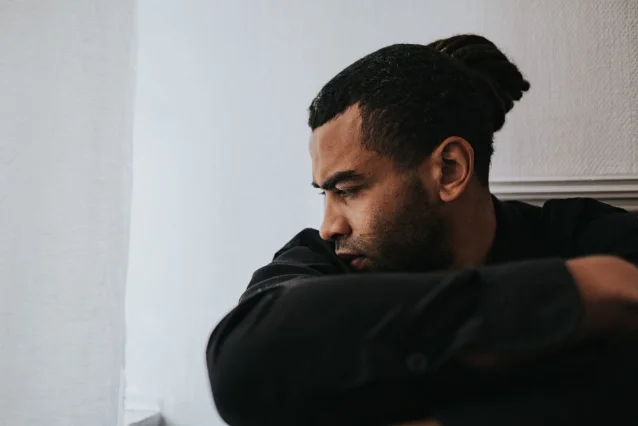
Young man sitting alone in deep thought, looking contemplative
Adolescence and early adulthood are the window when the brain is most vulnerable to disruptions in the dopamine and endocannabinoid systems. 3

The THC potency problem nobody's talking about enough

Cannabis in 2026 is not the same product it was in 2010 — or even 2015. Average THC content in California flower now exceeds 20%, compared to roughly 4–8% in products from the 1990s and early 2000s. Concentrates (dabs, wax, vape cartridges) can reach 70–95% THC. 1
This matters for two reasons. First, the dose your body receives per hit is dramatically higher than what older studies tracked. A lot of the research reassuring us that "moderate use is probably fine" was done on much lower-potency products. Second, legal commercialization has made high-potency products the default. Walk into a dispensary, and the cheap, lower-THC stuff isn't what they're promoting.
The study authors flagged this explicitly: as cannabis becomes more potent and more aggressively marketed, adolescent exposure to the active ingredient is going up, not down.
차트를 불러오는 중…

How to think about your actual risk

Some context before you spiral:
If you used cannabis as a teenager and you're doing fine, that is likely the outcome. Most people who used cannabis as teens don't develop psychosis or bipolar disorder. What the study establishes is a population-level signal — the rate goes up meaningfully in the group that used vs. the group that didn't. That still means most people in the "used" group were fine.
What changes is the calculation for someone deciding whether to start using now, or someone thinking about younger siblings or friends. The question isn't "will this definitely hurt me" — it's "does this meaningfully raise my odds of something I'd really rather not deal with?"
For people currently in their late teens or early 20s:
  • If you're not using: the data supports waiting until your mid-20s when your brain is more fully developed, if you choose to use at all.
  • If you're using occasionally: the research doesn't let you off the hook just because it's not every day. Reducing frequency and avoiding high-potency concentrates is the lower-risk direction.
  • If you notice early warning signs — paranoia that lingers after you're sober, thoughts that feel strange or disconnected, mood swings you can't explain — those are worth taking seriously and bringing up with a doctor, not dismissing.

What's worth watching for

The psychiatric disorders flagged in these studies — psychosis and bipolar disorder — don't usually arrive suddenly. They have prodromal (early warning) phases that can last months or years before a clear clinical picture develops.
Young woman looking pensive and thoughtful, sitting outdoors
Early psychiatric symptoms in young adults are often subtle — and frequently dismissed as stress or "just being in your head." 3
Early signs of psychosis in young adults can include: persistent difficulty distinguishing what's real, brief episodes of hearing or seeing things, strongly held unusual beliefs, significant social withdrawal, or a marked drop in how well you're functioning at work or school.
Early signs of a first bipolar episode: periods of feeling unusually elevated, needing much less sleep than normal but still having high energy, impulsive or reckless decisions, followed potentially by a crash into depression.
Neither of these is diagnosable from a checklist. But if you're consistently noticing these patterns — especially combined with heavy cannabis use — it's worth getting evaluated rather than waiting.
The bottom line isn't that cannabis will give you a mental illness. It's that the adolescent brain is genuinely more vulnerable than the adult brain to this particular disruption, and the signal in the data is strong enough to take seriously.

이 콘텐츠를 둘러싼 관점이나 맥락을 계속 보강해 보세요.

  • 로그인하면 댓글을 작성할 수 있습니다.